Urs Zimmermann, Switzerland (www.nepenthes.ch) · CC BY 3.0
About
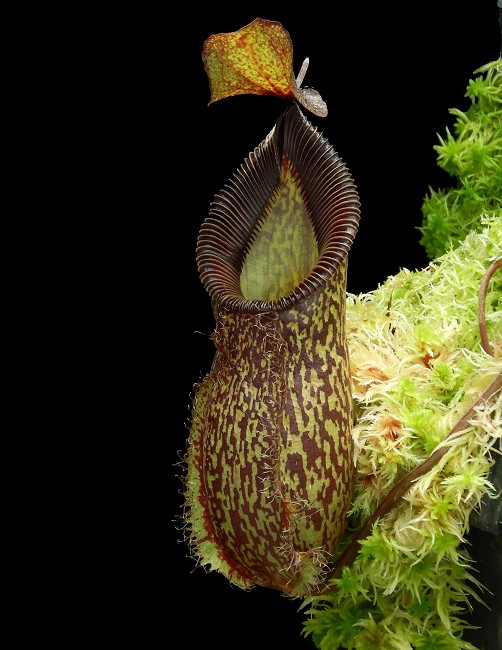
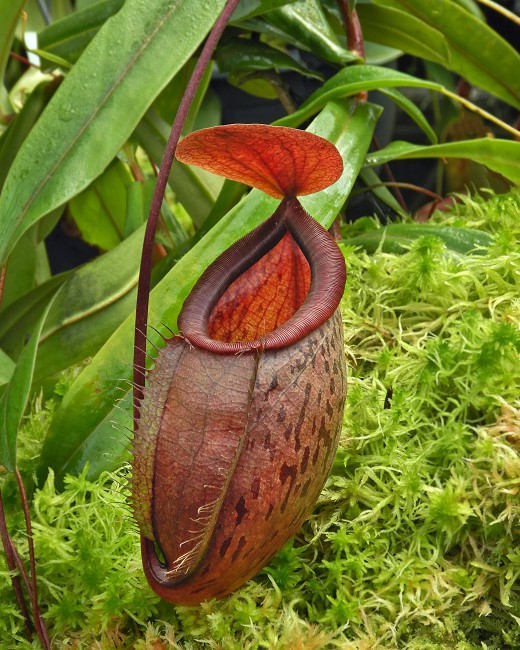
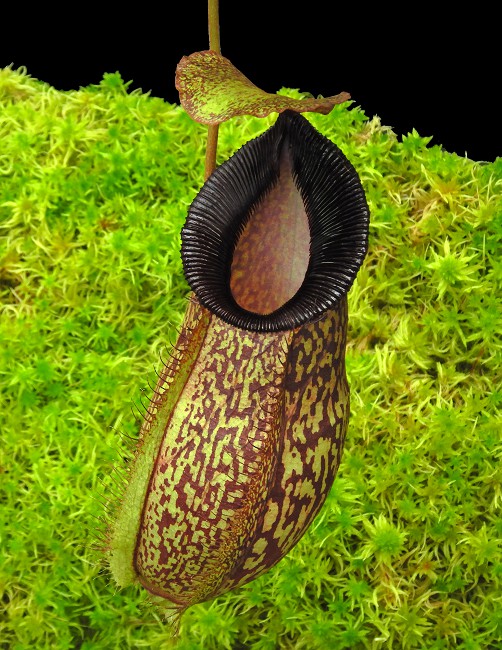
Nepenthes hamata is a tropical pitcher plant endemic to Sulawesi. It is a strong climber characterized by its highly developed peristome teeth, which gives the species its name.
Field notes
Morphology
The plant is a strong climber with stems that can reach up to 7 meters in length. The stems are terete to obtusely trigonous, varying in diameter from 3 mm in rosettes to 4–5 mm in climbing stems. Leaves are sessile and chartaceous, with variable lamina shapes ranging from linear to oblanceolate to oblong-elliptic.
Distribution & habitat
This species is endemic to Sulawesi, growing at elevations between 1,400 and 2,500 meters above sea level. The type material was collected from the west ridge of Mount Lumut, Central Sulawesi.
Ecology
As a pitcher plant, *Nepenthes hamata* is carnivorous, using its pitchers to trap prey. The source material does not detail the specific prey capture mechanism, mutualisms, or infauna.
Cultivation notes
The source material does not provide specific details on temperature range, humidity, or growth rate for cultivation. However, the species has been successfully propagated in vitro, and it remains a highly sought-after horticultural rarity.
History & etymology
The species was first encountered by Western explorers decades before its formal description. It was formally described in 1984, with the name *N. hamata* gaining greater popularity despite initial nomenclatural uncertainty with *N. dentata*.
Conservation
The source material does not provide information regarding the IUCN status or current threats to the species, though it notes that the species remains highly sought-after and somewhat of a horticultural rarity.
Habitat
- Altitude
- 1,400–2,500 m
- Altitude Class
- highland
- Native To
- Indonesia
- IUCN Status
- Least Concern
Taxonomy
- Described
- 1984
- Authority
- J.R.Turnbull & A.T.Middleton
Cultivation
- Difficulty
- difficult
- Temperature
- Day 18–25°C / Night 10–18°C
- Humidity
- 75–95%
Borneo Exotics 18 listings
View all →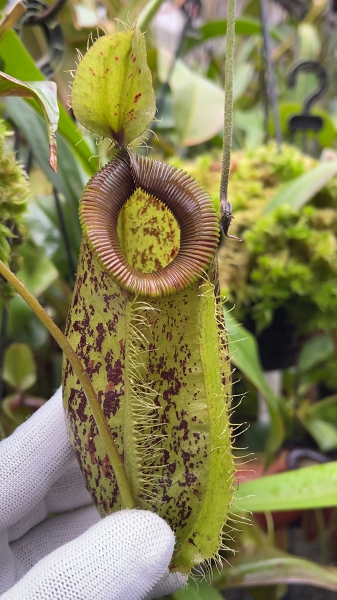
BE-4631
N. ampullaria x hamata – selected speckled clone
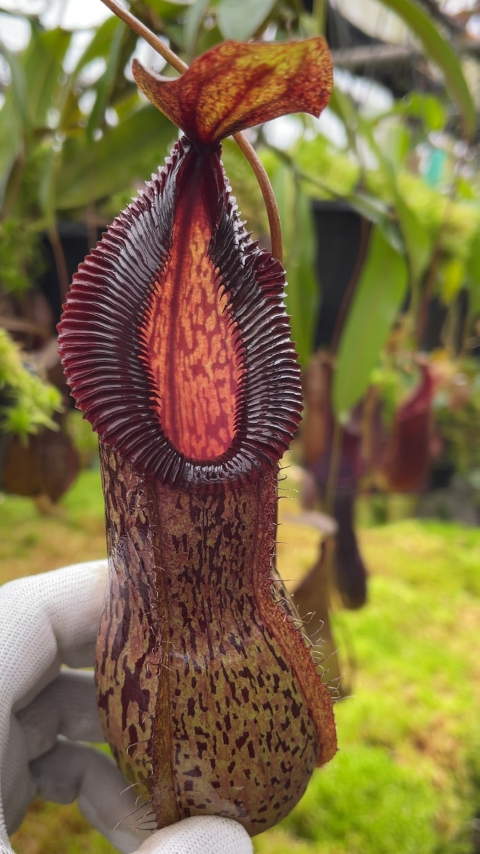
BE-3747
N. burkei x hamata – assorted clones
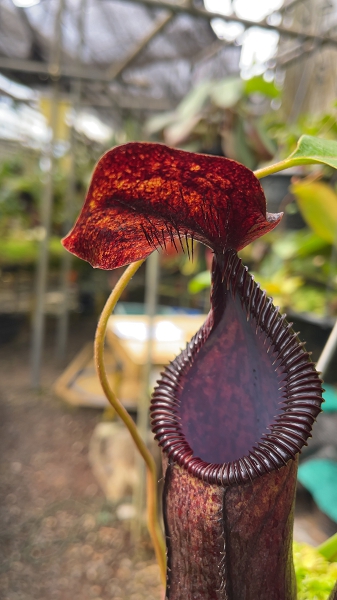
BE-4609
N. hamata x lowii - assorted clones
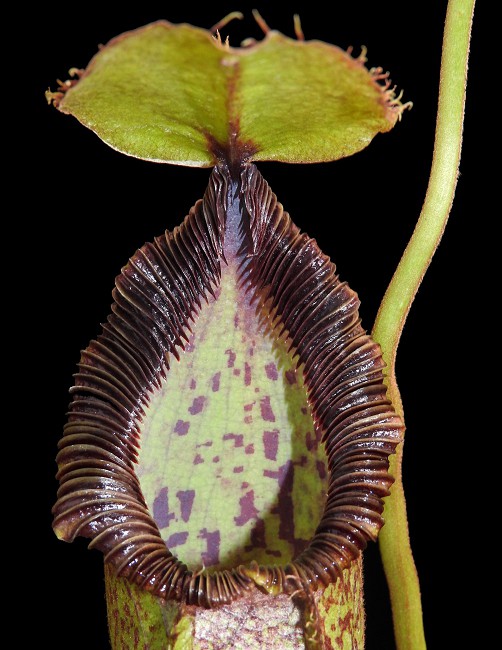
BE-3755
N. hamata x robcantleyi – assorted clones
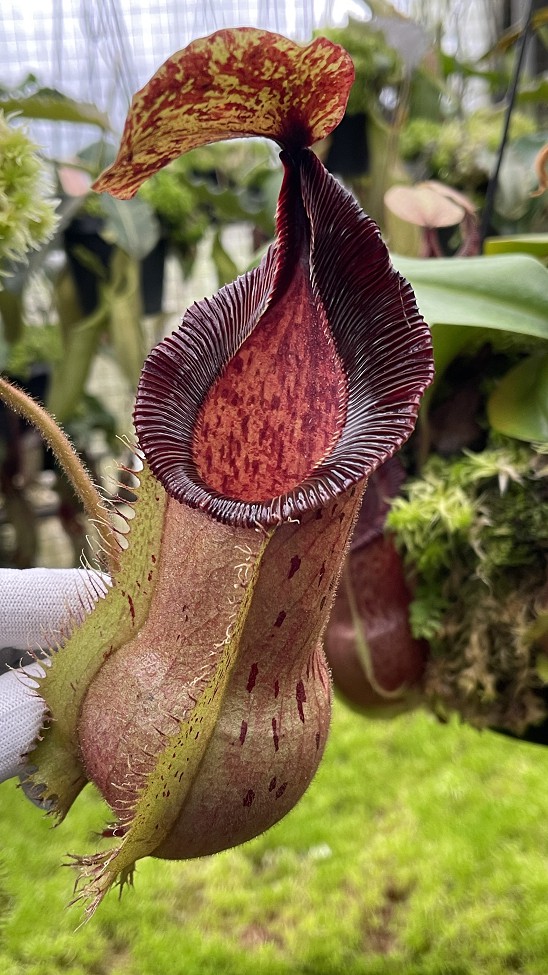
BE-3943
N. hamata x veitchii - assorted clones
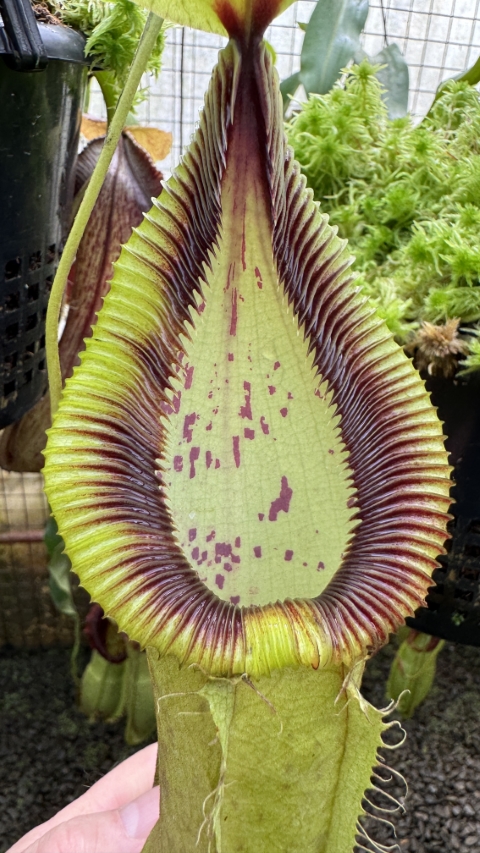
BE-3958
N. robcantleyi x hamata - assorted clones
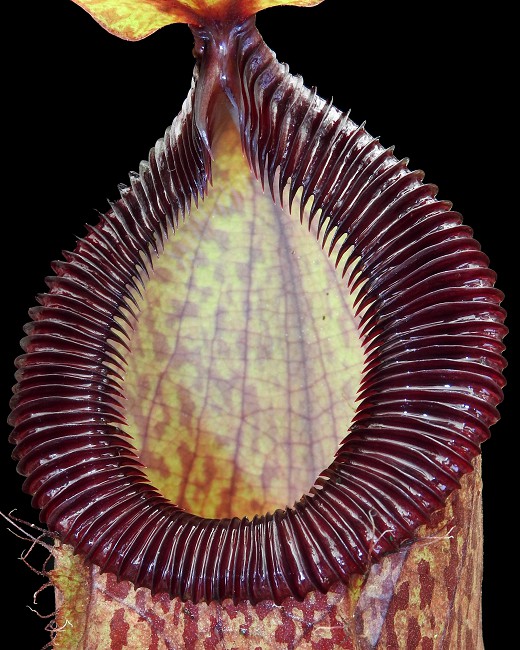
BE-3562
N. sibuyanensis x hamata - assorted clones
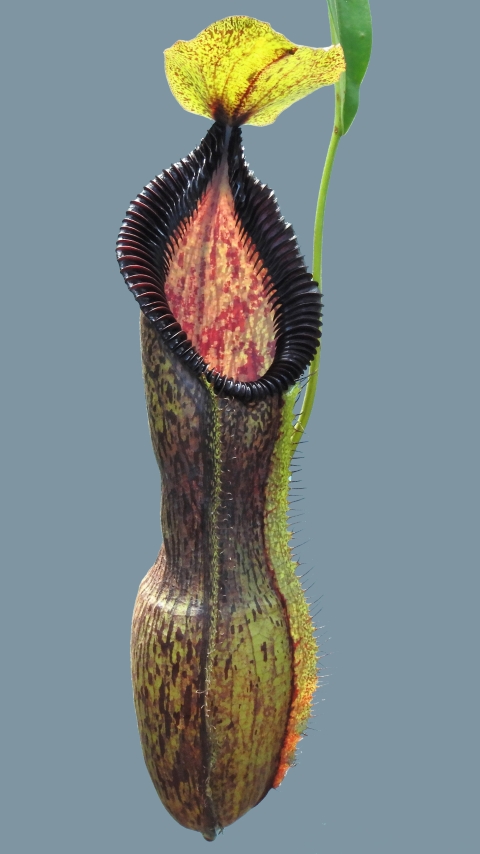
BE-4588
N. singalana x hamata - assorted clones
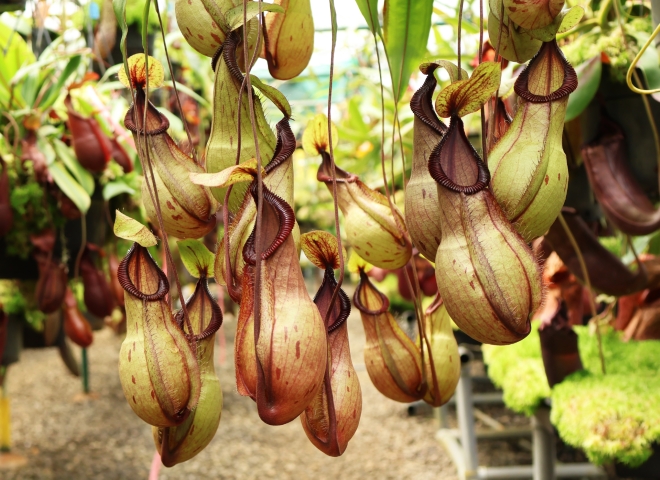
BE-4003
N. talangensis x hamata – assorted clones
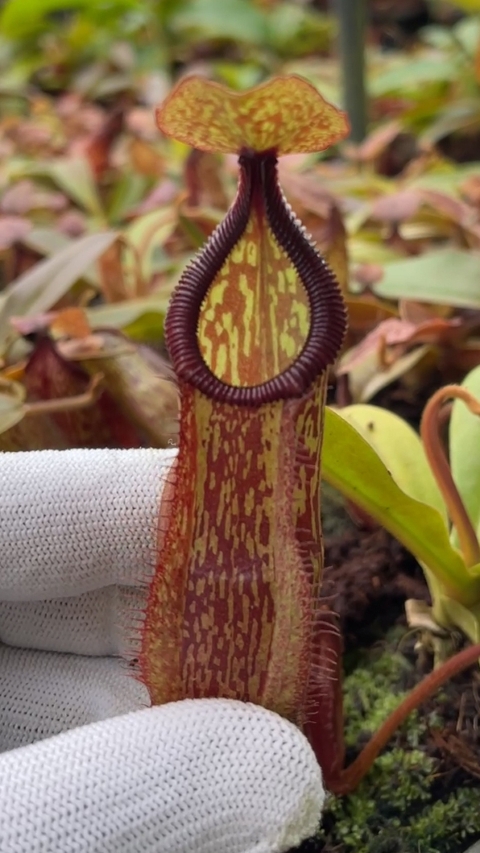
BE-3685
N. ‘Viking’ x hamata – assorted clones
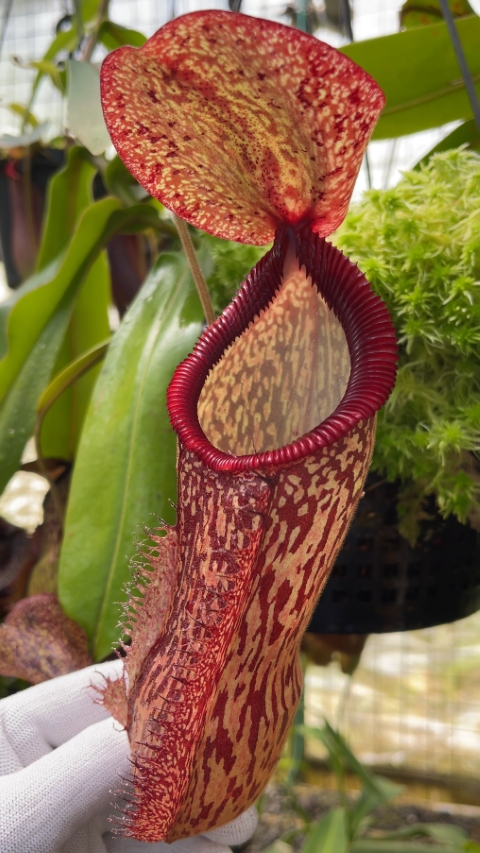
BE-4689
N. hamata x maxima - assorted clones
BE-4562
N. hamata x klossii
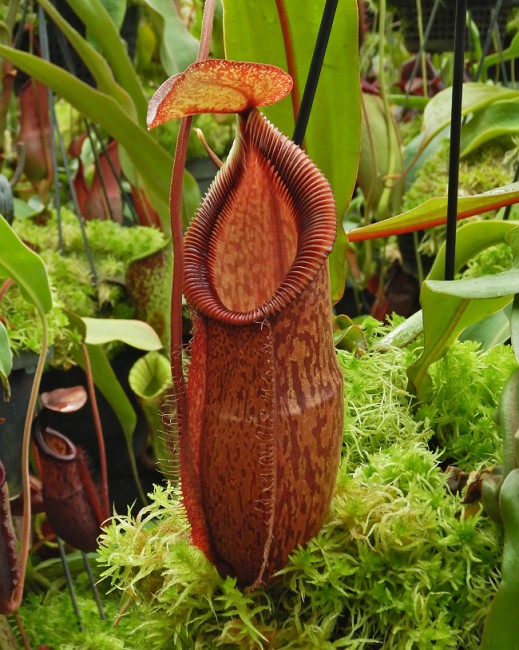
BE-4553
N. hamata x gymnamphora - assorted clones
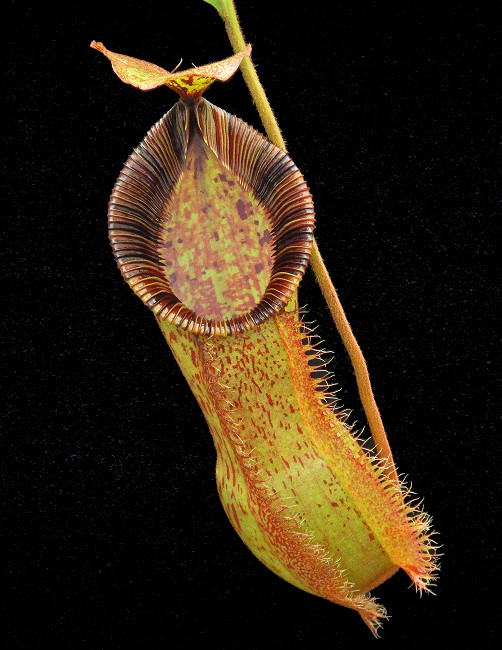
BE-4057
N. hamata x (veitchii x lowii) - assorted clones
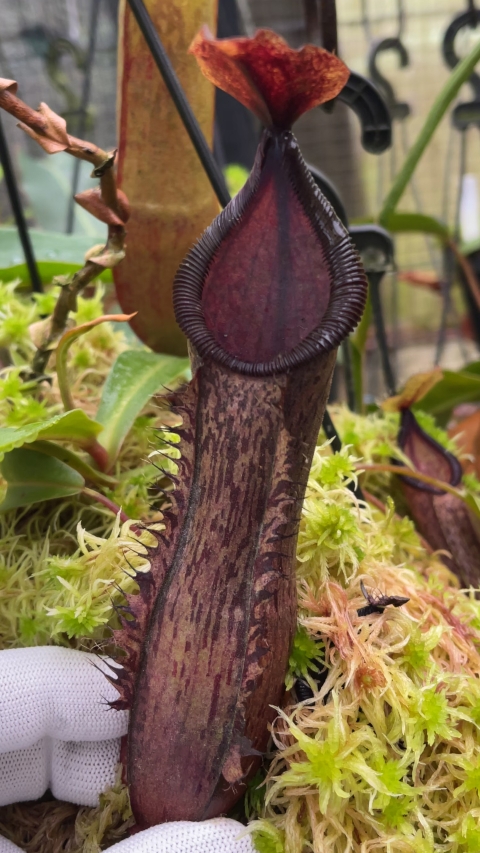
BE-4526
N. hamata x (lowii x tentaculata) - assorted clones
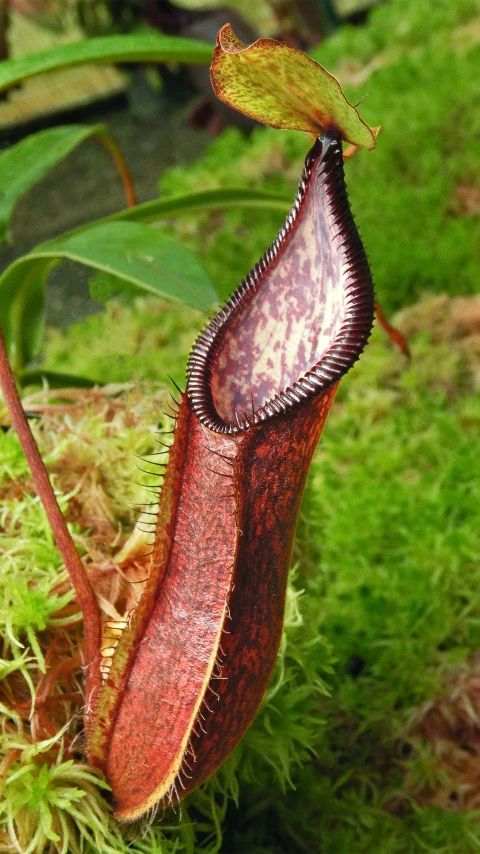
BE-4576
N. (singalana x diabolica) x hamata - assorted clones
BE-3985
N. (hamata x glabrata) x tenuis – assorted clones
BE-4574
N. (aristolochioides x spectabilis) x hamata ‘Lumut’
Crossed N. Hamata with another species?
Register the cross — if it's not yet documented you'll be the first contributor. If someone already registered it, you'll be redirected to add your photo.