Images © Borneo Exotics
Description
Returning with limited stocks for Feb 2026.
Returning with limited stocks for Feb 2026.
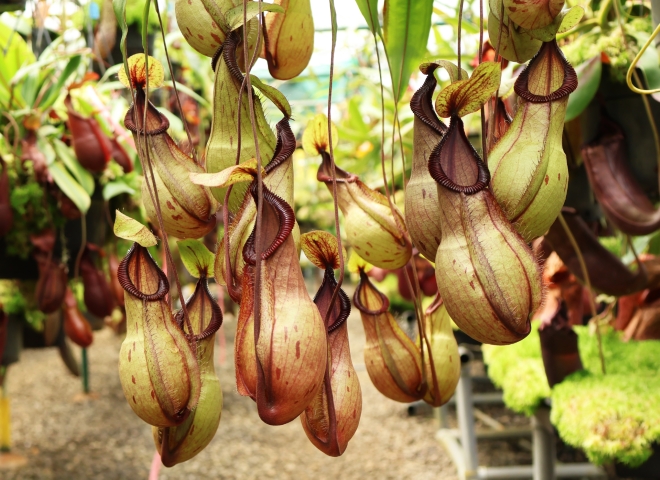
This easy-growing and rewarding item might be the
best cross we have seen so far between the iconic Nepenthes hamata and a
lowland species. It’s a prolific producer of pitchers, exhibiting many of the
best characteristics Nepenthes hamata but has the advantage of being easy-to-grow
under a range of temperatures, either lowland or intermediate.History:First
introduced to cultivation in Aug 2020.Origin:Horticultural,
bred by Borneo Exotics. The female parent is a selected clone of the
beautifulNepenthes.‘Viking’ – with scientific nameNepenthes mirabilis var. globosa–
selected from those sold under BE-3394, and the male parent is a selected
seed-grownNepenthes hamata.Source:A random selection from many different clones.Photo notes:Photos are of representative clones and may not be identical to plants
shipped. The last photos in the series show plants of typical sale sizes in
order of size S, M & L (when available).
This easy-growing and rewarding item might be the
best cross we have seen so far between the iconic Nepenthes hamata and a
lowland species. It’s a prolific producer of pitchers, exhibiting many of the
best characteristics Nepenthes hamata but has the advantage of being easy-to-grow
under a range of temperatures, either lowland or intermediate.
History:First
introduced to cultivation in Aug 2020.
Origin:Horticultural,
bred by Borneo Exotics. The female parent is a selected clone of the
beautifulNepenthes.‘Viking’ – with scientific nameNepenthes mirabilis var. globosa–
selected from those sold under BE-3394, and the male parent is a selected
seed-grownNepenthes hamata.
Source:A random selection from many different clones.
Photo notes:Photos are of representative clones and may not be identical to plants
shipped. The last photos in the series show plants of typical sale sizes in
order of size S, M & L (when available).
Climate:'Intermediate', which means it will flourish in a wide range of temperatures. We have tested it from 12 - 32 deg. C (54 - 90 deg. F), although it will tolerate temperatures outside this range.
Details
- BE Code
- BE-3685
- Type
- hybrid
- Climate
- lowland species
- Sizes
- Medium, Large