JeremiahsCPs · CC BY-SA 3.0
About
Nepenthes rajah is a highly sought-after carnivorous pitcher plant endemic to Mount Kinabalu and Mount Tambuyukon in Malaysian Borneo. It is renowned for producing some of the largest pitchers in the genus, making it a striking specimen for collectors.
Field notes
Morphology
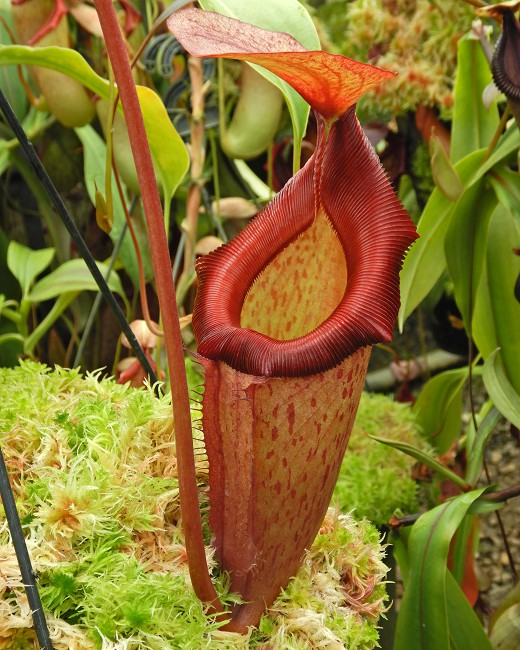
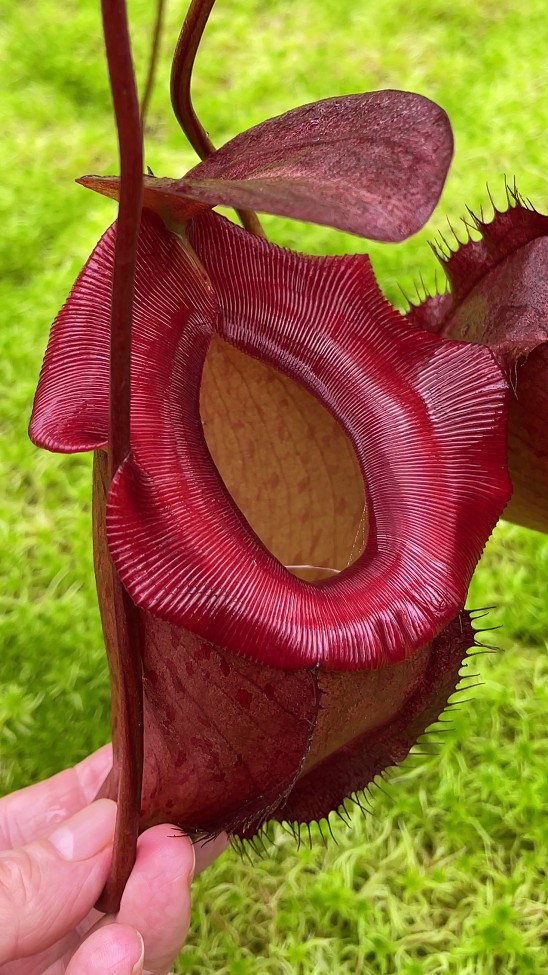
The plant is a scrambling vine with leathery, peltate leaves and tendrils. It produces two types of traps: large, ovoid 'lower' or terrestrial pitchers, which are typically red to purple outside and lime green to purple inside. These pitchers feature a greatly expanded, scalloped peristome and a huge, vaulted lid. Mature plants may also produce smaller, funnel-shaped 'upper' or aerial pitchers. The pitchers are covered in nectar-secreting glands, and the plant can grow up to 6 meters in length.
Distribution & habitat
This species is endemic to the highland regions of Mount Kinabalu and neighboring Mount Tambuyukon in Sabah, Malaysian Borneo. It thrives in areas with serpentine substrates and seeping ground water. Its altitudinal range is substantial, spanning from 1,500 to 2,650 meters above sea level.
Ecology
As a carnivorous plant, *Nepenthes rajah* primarily captures insects, especially ants, using pitfall traps. It is famous for occasionally trapping small vertebrates, including frogs, lizards, and even small mammals like rats. The plant has a specialized mutualistic relationship with mountain treeshrews and summit rats, which visit the pitchers for nectar and deposit droppings, providing the plant with essential nitrogen.
Cultivation notes
While historically difficult to cultivate, tissue culture has increased its availability. It is a highland species that requires specific conditions mimicking its natural habitat. The plant is known for its impressive size and is highly valued by collectors, though care should be taken due to its specialized needs.
History & etymology
The species was first collected by Hugh Low on Mount Kinabalu in 1858 and formally described by Joseph Dalton Hooker the following year. It was named in honor of James Brooke, the first White Rajah of Sarawak, giving it the name *Nepenthes rajah*. The specific epithet 'rajah' means 'King' in Malay, fitting its impressive size.
Conservation
Due to its highly localized distribution, *Nepenthes rajah* is classified as an endangered species by the IUCN. It is also listed on CITES Appendix I, indicating strict trade controls and conservation concern.
Habitat
- Altitude
- 1,500–2,650 m
- Altitude Class
- highland
- Native To
- Malaysia
- IUCN Status
- Endangered
Taxonomy
- Described
- 1859
- Authority
- Hook.f.
Cultivation
- Difficulty
- difficult
- Temperature
- Day 15–22°C / Night 5–12°C
- Humidity
- 75–95%
Borneo Exotics 10 listings
View all →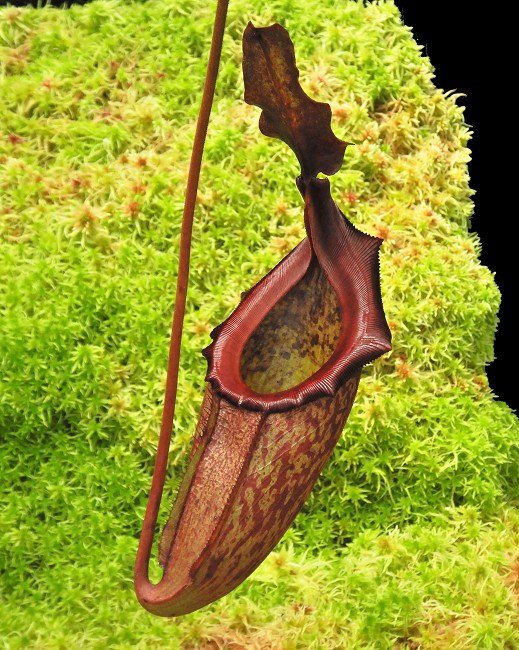
BE-4577
N. rajah x eymae - assorted clones
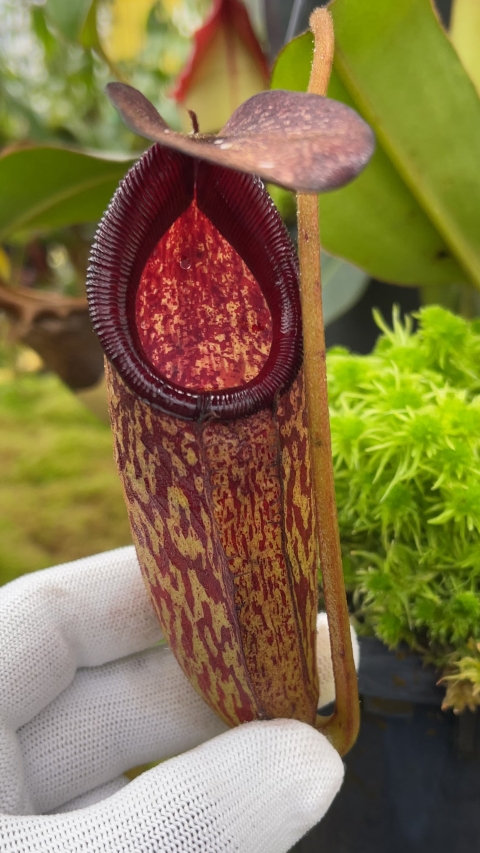
BE-4071
N. rajah x klossii
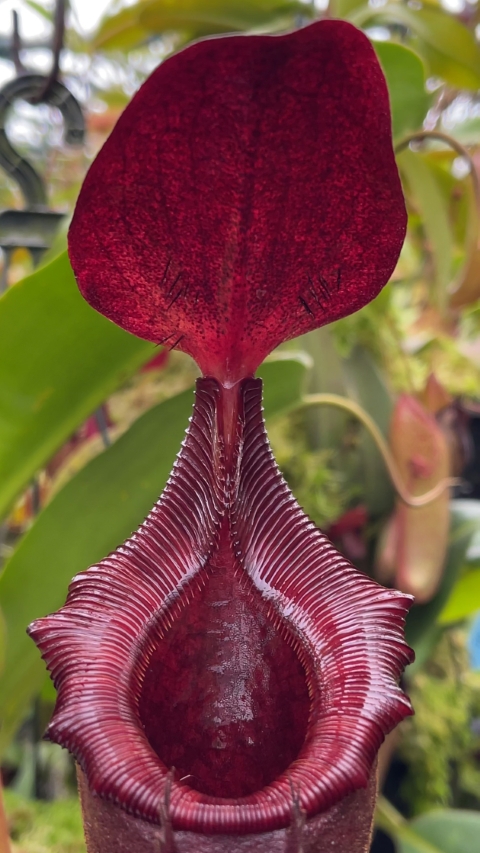
BE-4502
N. rajah x lowii - assorted clones
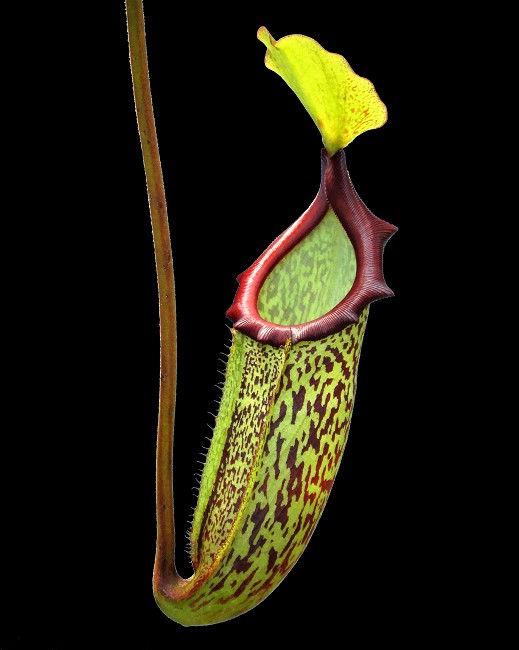
BE-4509
N. rajah x platychila – assorted clones
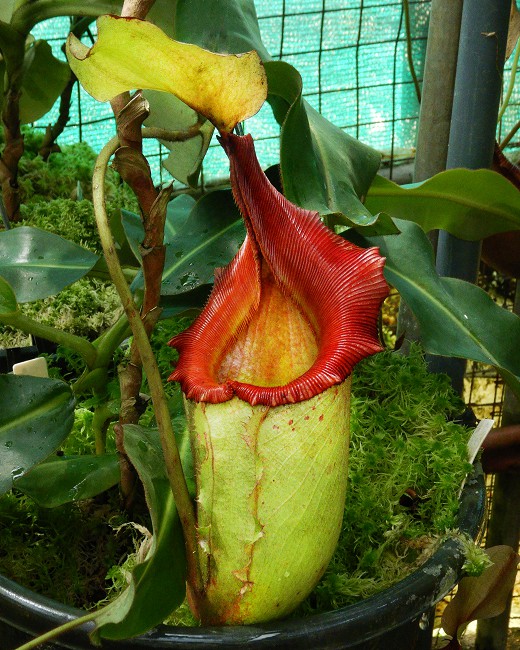
BE-3730
N. rajah x veitchii – assorted clones
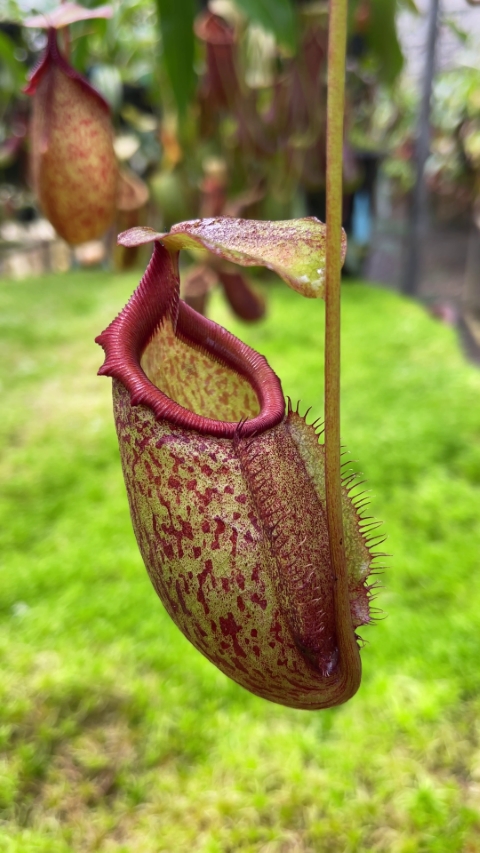
BE-4575
N. rajah x gymnamphora – assorted clones
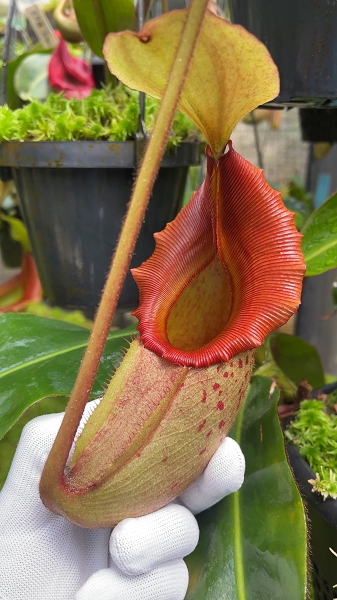
BE-4578
N. rajah x veitchii 'Gold Rush' – assorted clones
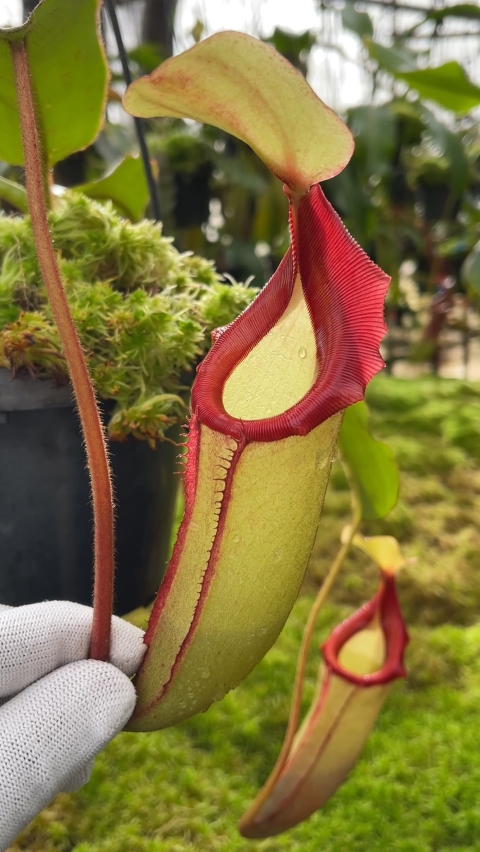
BE-4666
N. rajah x (chaniana x veitchii)
BE-3902
N. rajah x (burbidgeae x edwardsiana) – assorted clones
BE-4083
N. rajah x tenuis – assorted clones
Crossed N. Rajah with another species?
Register the cross — if it's not yet documented you'll be the first contributor. If someone already registered it, you'll be redirected to add your photo.