Images © Borneo Exotics
Description
Returning for Aug 2025 with limited availability at larger sizes – only while stocks last!
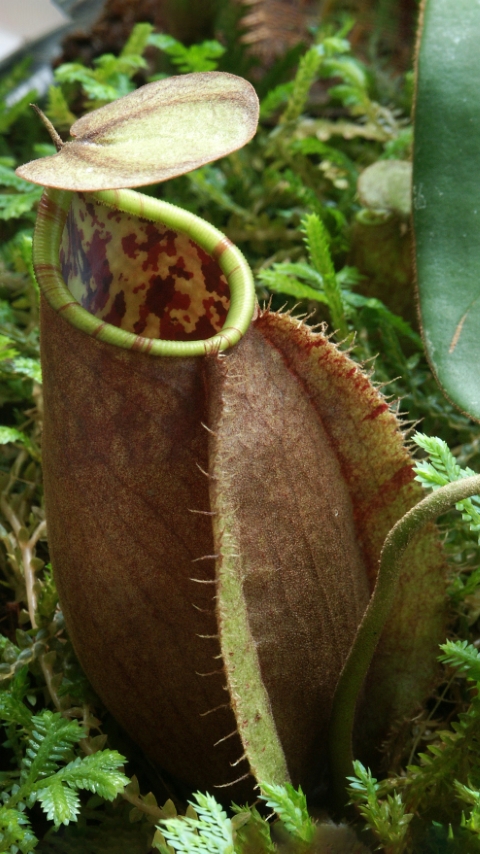
This is the form originating from the lower slopes of Gng Tambusisi in Sulawesi, which are generally found to be more colourful than the form from Lampia. All clones available under this selection seem to be typical of the species. In habitat is reported to grow in soils that are predominantly ultramafic, however, we grow it in our usual mixture of coir chips and dust.Now even better!As of Jan 2025, the quality of all items grown in our indoor facilities have been further improved. This includes all items classified as ‘lowland’ such as this one. Items in our indoor facilities are now grown under extremely hard conditions, with high light levels and have super-tough leaves, making them much easier to establish.See a videoshowing how we achieved this.History:First introduced in 2009.Origin:Horticultural.Source:A random selection from 14 different clones.Photo notes:Photos are of juvenile pitchers of representative clones and may not be identical to plants shipped. The last photos in the series show plants of typical sale sizes in order of size S, M & L (when available).Climate:Lowland. We find it grows best between about 32 deg. C (90 deg. F) in the daytime, down to 24 deg. C (75 deg. F) at night, although it will tolerate temperatures outside this range.
This is the form originating from the lower slopes of Gng Tambusisi in Sulawesi, which are generally found to be more colourful than the form from Lampia. All clones available under this selection seem to be typical of the species. In habitat is reported to grow in soils that are predominantly ultramafic, however, we grow it in our usual mixture of coir chips and dust.
Now even better!As of Jan 2025, the quality of all items grown in our indoor facilities have been further improved. This includes all items classified as ‘lowland’ such as this one. Items in our indoor facilities are now grown under extremely hard conditions, with high light levels and have super-tough leaves, making them much easier to establish.See a videoshowing how we achieved this.
History:First introduced in 2009.
Origin:Horticultural.
Source:A random selection from 14 different clones.
Photo notes:Photos are of juvenile pitchers of representative clones and may not be identical to plants shipped. The last photos in the series show plants of typical sale sizes in order of size S, M & L (when available).
Climate:Lowland. We find it grows best between about 32 deg. C (90 deg. F) in the daytime, down to 24 deg. C (75 deg. F) at night, although it will tolerate temperatures outside this range.
Related Wiki
View N. tomoriana - assorted clones on the wiki →Details
- BE Code
- BE-3344
- Type
- species
- Climate
- lowland’ such as this one
- Sizes
- Small, Medium