Reference
Pests
Mites, thrips, mealybugs, scale and the other animals that feed on plants: how to recognise them and what to do.
28 articles
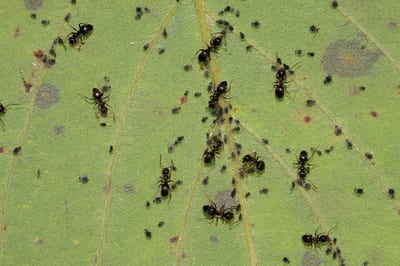 DependsAntsAlso: Argentine ant, Yellow crazy antAnts are rarely plant-eaters themselves, but many "farm" aphids, scale insects, mealybugs and whiteflies for their sugary honeydew and protect them from predators, which lets those pests multiply. At the same time ants eat many insects, and some, such as weaver ants in Southeast Asia, are used to protect fruit trees.
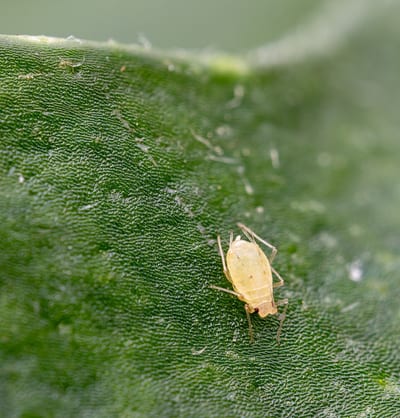 HarmfulAphidsAlso: Greenfly, BlackflyAphids are small, soft-bodied insects that suck sap from soft new growth and buds. They multiply very quickly, coat leaves in sticky honeydew and can spread plant viruses, but they seldom kill an established plant and are eaten by many natural enemies.
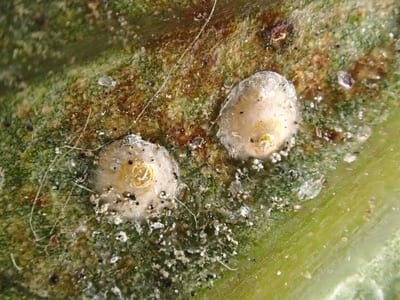 HarmfulArmored scaleAlso: Armoured scale, DiaspididaeArmored scales are tiny insects that live under a hard, flat wax cover. They make no honeydew, so infestations often go unnoticed until leaves yellow and drop or shoots die back, and several systemic products that work on soft scales do not control them.
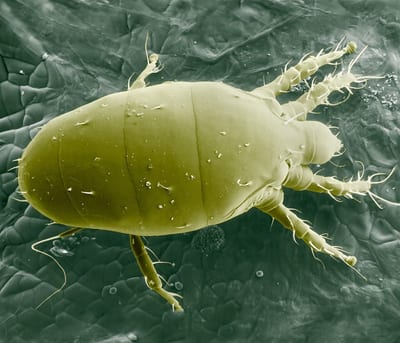 HarmfulBroad mitesAlso: Polyphagotarsonemus latus, Tarsonemid miteBroad mites are microscopic mites that feed on the youngest leaves and buds. Their toxic saliva leaves new growth twisted, hardened and bronzed underneath, damage that is easily mistaken for herbicide injury, nutrient deficiency or a virus. They prefer warm, humid conditions.
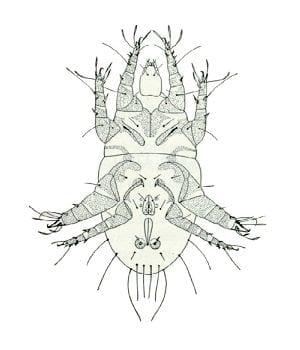 HarmfulBulb mitesAlso: Rhizoglyphus echinopus, Rhizoglyphus robiniBulb mites are tiny, slow-moving mites that feed on bulbs, corms and other underground plant parts. They are usually secondary pests that follow injury or rot, but their feeding lets fungi and bacteria in, so bulbs soften and decay.
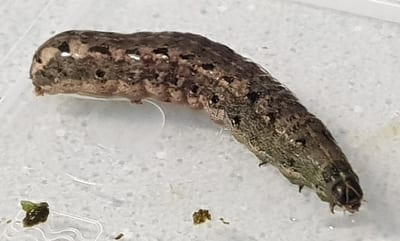 HarmfulCaterpillarsAlso: Moth and butterfly larvae, ArmywormsCaterpillars are the larvae of moths and butterflies. They chew leaves, flowers, buds and fruit and can strip a plant quickly, but low numbers are usually tolerable, and many are food for birds and other wildlife and become pollinating adults.
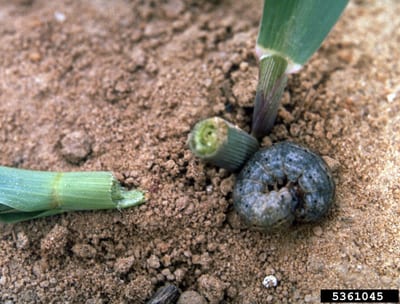 HarmfulCutwormsAlso: Black cutworm, Agrotis ipsilonCutworms are soil-dwelling caterpillars of several night-flying moths. They hide in the soil by day and at night chew through the stems of seedlings and young transplants at or just below soil level, so plants are found toppled or wilting.
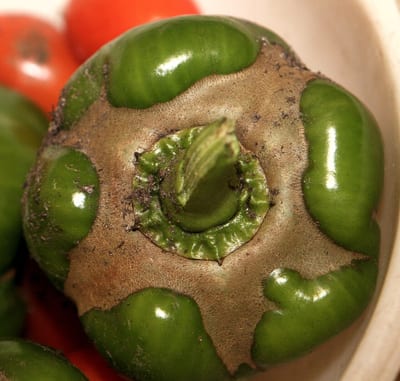 HarmfulCyclamen mitesAlso: Strawberry mite, Phytonemus pallidusCyclamen mites are microscopic relatives of broad mites that hide in plant crowns, unopened leaves and flower buds. Unlike spider mites they like cool, humid conditions, and they leave the centre of the plant stunted, crinkled and thickened, with withered flowers.
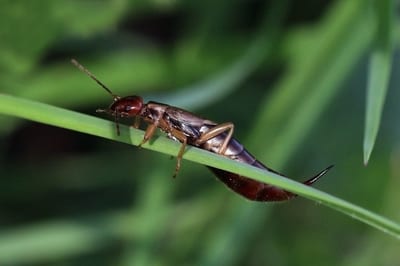 DependsEarwigsAlso: European earwig, Common earwigEarwigs are night-active insects with pincers at the tail. They eat both plants and small insects: they can rag the petals of dahlias and other flowers and damage seedlings, but they also eat aphids and insect eggs and are useful predators on fruit trees.
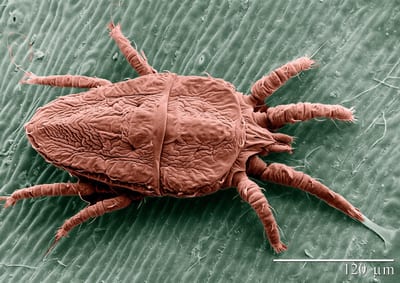 HarmfulFalse spider mitesAlso: Flat mites, TenuipalpidaeFalse spider mites, or flat mites, are very small, flat, slow-moving mites that feed on leaf undersides near the midrib and veins. They make no webbing, and on orchids they leave pitted, silvery patches that turn rusty black or brown and scabby. Several Brevipalpus species transmit plant viruses.
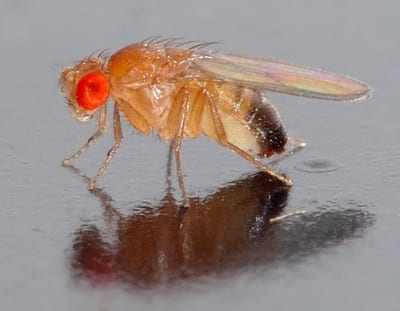 DependsFruit fliesAlso: Vinegar flies, DrosophilaTwo quite different insects are called fruit flies. Vinegar flies (Drosophila) are tiny nuisance flies that breed in fermenting fruit and rubbish indoors and do not harm healthy plants. True fruit flies such as the oriental fruit fly (Bactrocera dorsalis), common in Southeast Asia including Malaysia, lay eggs inside ripening fruit and are serious pests of fruit trees.
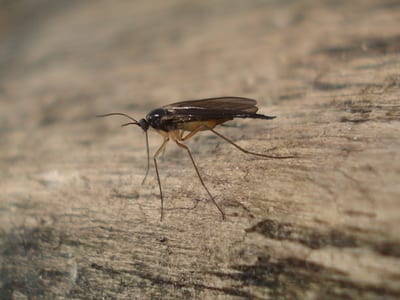 HarmfulFungus gnatsAlso: Sciarid flies, Dark-winged fungus gnatsFungus gnats are small, dark flies that breed in constantly moist, organic potting mix. The adults are mostly a nuisance, but the larvae live in the top of the mix and can chew roots and the base of soft stems, especially on seedlings, cuttings and young plants.
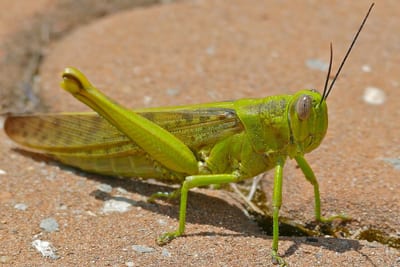 HarmfulGrasshoppersAlso: Javanese grasshopper, Valanga nigricornisGrasshoppers are large chewing insects that can bite big pieces out of leaves or eat young plants entirely. Damage is patchy from year to year; outbreaks follow weather that favours their eggs and young.
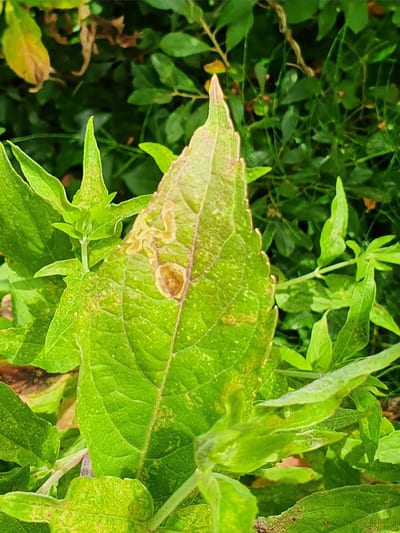 HarmfulLeaf minersAlso: Leafminers, LiriomyzaLeaf miners are insect larvae that live and feed between the upper and lower surfaces of a leaf, leaving pale winding tunnels or blotches. The damage is often cosmetic, but heavy mining can make leaves drop and slow seedlings and leafy crops.
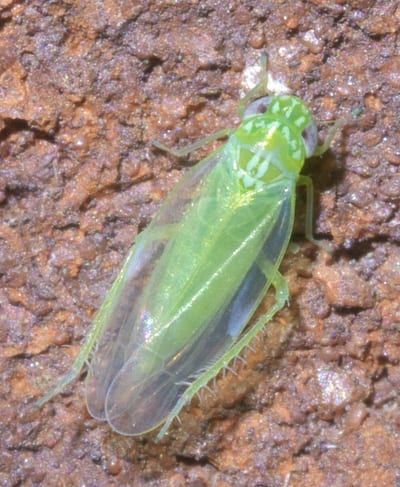 HarmfulLeafhoppersAlso: Cicadellidae, Potato leafhopperLeafhoppers are slender, wedge-shaped insects that jump or fly off when disturbed, while their nymphs scuttle sideways. Their feeding speckles leaves white; some species inject a toxin that scorches leaf edges (hopperburn), and others spread plant diseases such as aster yellows.
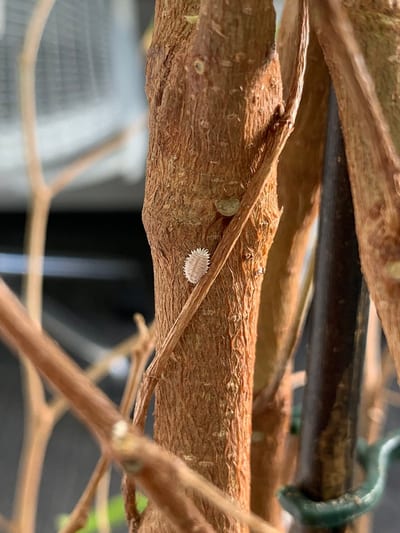 HarmfulMealybugsAlso: Citrus mealybug (Planococcus citri), Longtailed mealybug (Pseudococcus longispinus)Mealybugs are soft, oval insects coated in white powdery wax that cluster in leaf axils, sheaths and other sheltered spots. They suck sap, excrete honeydew and are among the hardest houseplant pests to eliminate, so checking plants before you buy them matters more than any spray.
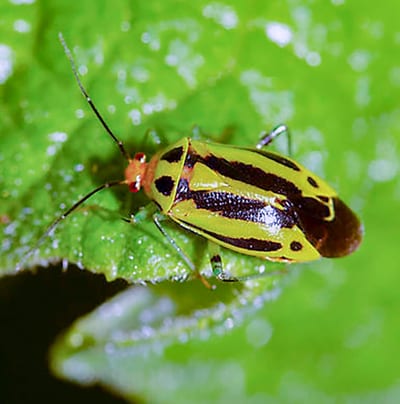 DependsPlant bugsAlso: Capsid bugs, Mirid bugsPlant bugs (capsids or mirids) are active, flattened true bugs; many pierce buds, shoot tips and young leaves, leaving sunken spots, holes or distorted, blackened growth. The family is huge, however, and some members are predators used in biological control, so identify a bug before acting.
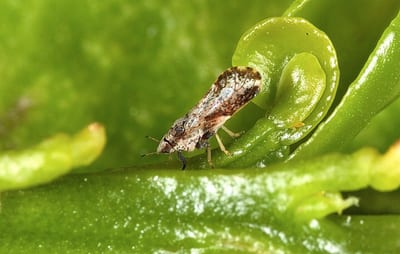 HarmfulPsyllidsAlso: Jumping plant lice, PsylloideaPsyllids are small, jumping sap-feeders, and each species feeds on one plant or a close group of plants. Nymphs produce honeydew and wax, and can curl, pit or gall the leaves. The Asian citrus psyllid is the most serious because it spreads citrus greening disease (huanglongbing).
- HarmfulRoot mealybugsAlso: Ground mealybugs, RhizoecusRoot mealybugs are mealybugs that live below the soil surface on roots, so they are usually discovered only when a plant is unpotted. White, waxy deposits on the roots and around the root ball are the giveaway; cacti, succulents, African violets and palms are common hosts.
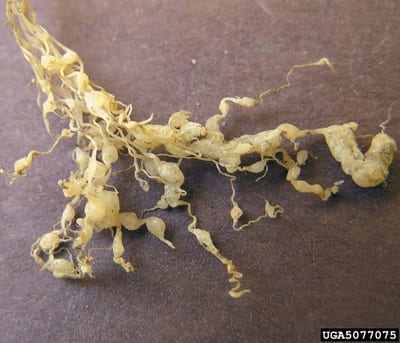 HarmfulRoot-knot nematodesAlso: Meloidogyne, Root-knot eelwormsRoot-knot nematodes are microscopic roundworms that live inside roots and make them swell into knobbly galls. Galled roots take up water and nutrients poorly, so plants wilt, yellow and grow slowly. They are most serious in warm climates and sandy soils.
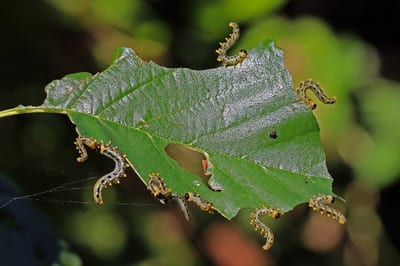 HarmfulSawfly larvaeAlso: Sawflies, Gooseberry sawflySawfly larvae look like caterpillars but belong to the same insect order as bees, wasps and ants. They often feed in groups and can strip the leaves from a shrub within days, and because they are not caterpillars, Bt sprays do not affect them.
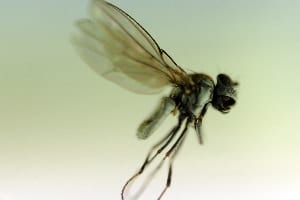 HarmfulShore fliesAlso: Scatella stagnalis, EphydridaeShore flies are small, sturdy black flies that breed in algae growing on wet potting mix, pots, benches and floors. Neither the adults nor the larvae feed on plants; the problem is black fly specks on leaves, nuisance swarms and a possible role in spreading root diseases.
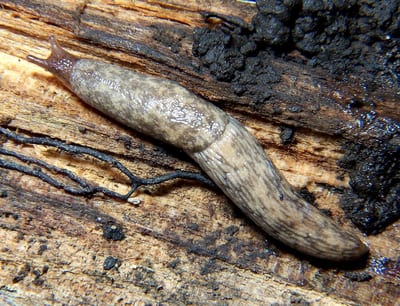 HarmfulSlugs and snailsAlso: Garden snail, Grey field slugSlugs and snails are molluscs that graze leaves, flowers, seedlings and soft fruit, mainly at night and in damp weather. Their smooth-edged holes and silvery slime trails give them away. In the tropics, the invasive giant African land snail is a major plant pest and can carry a parasite dangerous to people.
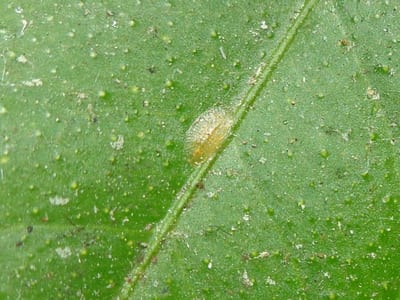 HarmfulSoft scaleAlso: Soft scales, CoccidaeSoft scales are immobile sap-feeding insects whose adult females look like small smooth or waxy bumps stuck to stems and leaf veins. They excrete plenty of honeydew, so sticky leaves, black sooty mould and busy ants are often the first clue.
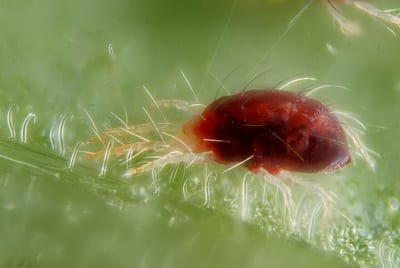 HarmfulSpider mitesAlso: Two-spotted spider mite, Glasshouse red spider miteSpider mites are tiny eight-legged relatives of spiders that feed on leaf cells, mostly from the undersides. They thrive in hot, dry, still air, and the first sign is usually a fine pale speckling on the upper leaf surface, followed in heavy infestations by silk webbing.
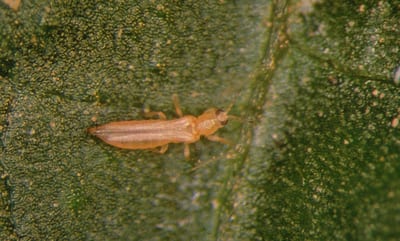 HarmfulThripsAlso: Western flower thrips (Frankliniella occidentalis), ThunderfliesThrips are slender insects about 1.3 mm long or less that scrape leaf and petal surfaces and suck up the contents. Damaged leaves look silvery or dull and are dotted with dark, varnish-like droppings; the western flower thrips also spreads plant viruses.
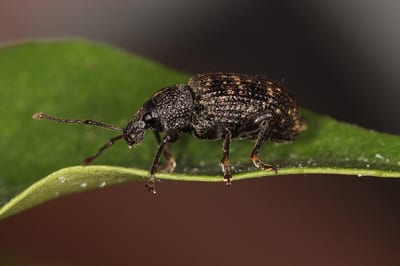 HarmfulVine weevilsAlso: Black vine weevil, Otiorhynchus sulcatusThe vine weevil is a beetle whose adults notch leaf edges at night and whose grubs eat roots, tubers and stem bases in the soil. The grubs are especially damaging to plants in containers, which can suddenly wilt and die with most of their roots gone.
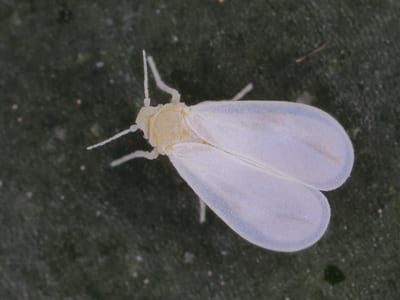 HarmfulWhitefliesAlso: Greenhouse whitefly (Trialeurodes vaporariorum), Silverleaf or sweetpotato whitefly (Bemisia tabaci)Whiteflies are tiny sap-sucking insects with white, waxy wings that flutter up in a cloud when a plant is disturbed. Their flat, scale-like nymphs feed on leaf undersides, covering the plant in honeydew and sooty mould, and some species spread plant viruses.