BE-3100specieshighland conditions, and this clone was the one that tolerated our particular conditions the best out of the 24 that we tested
WIP N. lowii - Trus Madi - best selected clone
View on borneoexotics.net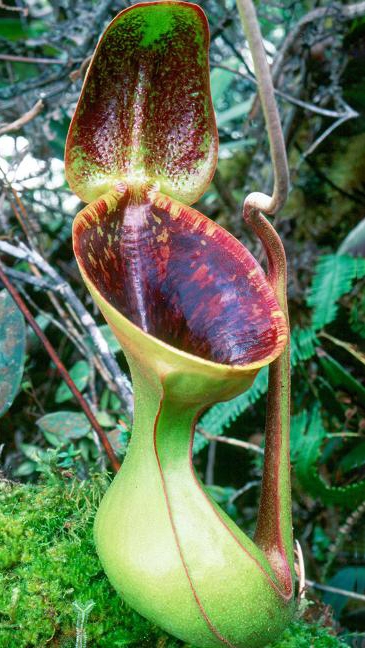
Images © Borneo Exotics
Description
Updated for April 2026
Updated for April 2026
This truly fabulous species has extremely tough purple/green pitchers. It’s a slow grower, but highly, highly rewarding, since few other species have such contrasting and unique upper and lower pitchers – a feature known as ‘dimorphism’. It’s hugely famous for feeding on the droppings of tree shrews in the wild, and occasionally birds, which it lures with a copious sugary exudate from under the lid of both lower and upper pitchers.This particular clone was selected as the best out of 24 clones for being the most vigorous, and it produces robust plants, which have an appearance that is fully typical of the species. There is also now a lot of evidence that this clone grows more easily than all other clones commonly in cultivation today, being tolerant of warmer night-time temperatures than is usual for this species. This is probably due to the fact that our nurseries are not held at extreme highland conditions, and this clone was the one that tolerated our particular conditions the best out of the 24 that we tested.As it naturally grows in very humid montane moss forests, even mature plants often have lightly developed root systems. Since it’s a characteristic of the species, the plants we ship often have few roots, but because they are so well hardened, they are still easy to establish.History:First introduced in 2001.Origin:HorticulturalSource:From a single carefully selected clone.Photo notes:The nursery shots shown here are of the same clone as the plants shipped, and other photos are of plants in habitat. The last photos in the series show plants of typical sale sizes in order of size S, M & L (when available).
This truly fabulous species has extremely tough purple/green pitchers. It’s a slow grower, but highly, highly rewarding, since few other species have such contrasting and unique upper and lower pitchers – a feature known as ‘dimorphism’. It’s hugely famous for feeding on the droppings of tree shrews in the wild, and occasionally birds, which it lures with a copious sugary exudate from under the lid of both lower and upper pitchers.
This particular clone was selected as the best out of 24 clones for being the most vigorous, and it produces robust plants, which have an appearance that is fully typical of the species. There is also now a lot of evidence that this clone grows more easily than all other clones commonly in cultivation today, being tolerant of warmer night-time temperatures than is usual for this species. This is probably due to the fact that our nurseries are not held at extreme highland conditions, and this clone was the one that tolerated our particular conditions the best out of the 24 that we tested.
As it naturally grows in very humid montane moss forests, even mature plants often have lightly developed root systems. Since it’s a characteristic of the species, the plants we ship often have few roots, but because they are so well hardened, they are still easy to establish.
History:First introduced in 2001.
Origin:Horticultural
Source:From a single carefully selected clone.
Photo notes:The nursery shots shown here are of the same clone as the plants shipped, and other photos are of plants in habitat. The last photos in the series show plants of typical sale sizes in order of size S, M & L (when available).
Climate:'Highland'. We grow it between about 26 deg. C (80 deg. F) in the daytime, down to 12 deg. C (54 deg. F) at night, although it will certainly tolerate temperatures well outside this range.
Details
- BE Code
- BE-3100
- Type
- species
- Climate
- highland conditions, and this clone was the one that tolerated our particular conditions the best out of the 24 that we tested
- Sizes
- Small